Number of piers
Most of a slab bill is driven by how many supports go in and how deep they need to reach below East Texas clay.
Bring sloping floors back toward level
If a marble rolls across your kitchen or furniture leans away from the wall, the house has likely moved out of level. House leveling is the process of measuring that movement, lifting the low parts of the structure and supporting them so the floors sit as level as the building allows.
A crew or engineer uses a digital manometer or laser level to take elevation readings at many points across the floor, then draws a map showing high and low spots. That map, sometimes called an elevation survey, shows whether the house has settled at one corner, dipped in the middle or heaved upward in one area.
Heave matters in Tyler. Clay that gets saturated, often from a leak or poor drainage, can push part of a slab up. Lifting the rest of the house to match a heaved area is a different job from lifting a settled corner, so a good survey prevents the wrong fix.
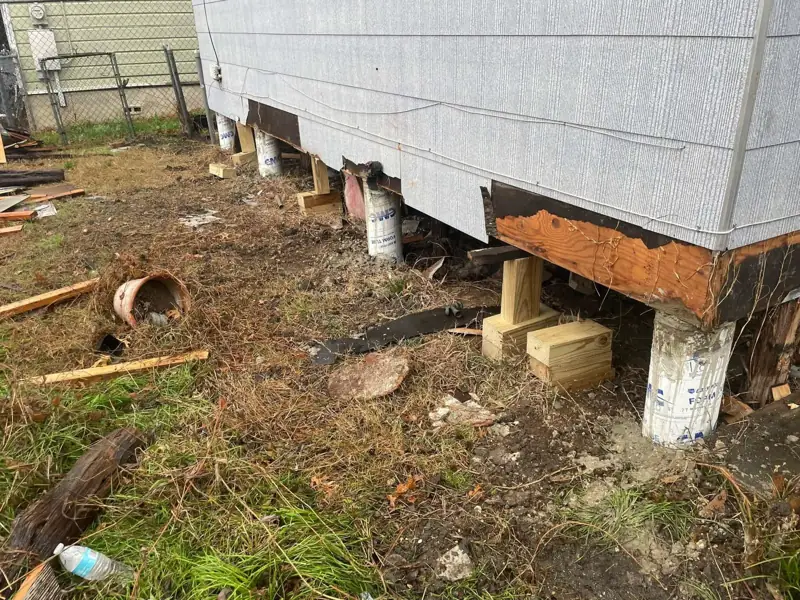
On slab houses, leveling is done with pressed or drilled piers under the grade beam; hydraulic jacks lift the slab in small increments while the crew watches the readings. On raised homes, jacks lift the beams and the crew adds new piers or steel shims.
The goal is usually to get the floor within a reasonable tolerance, not perfectly flat, because old framing has often taken a permanent set.
Expect some cosmetic follow-up. Doors may need re-hanging, and drywall cracks that opened as the house settled may close up or shift. Plan paint and trim work after the house has had time to settle on its new supports.
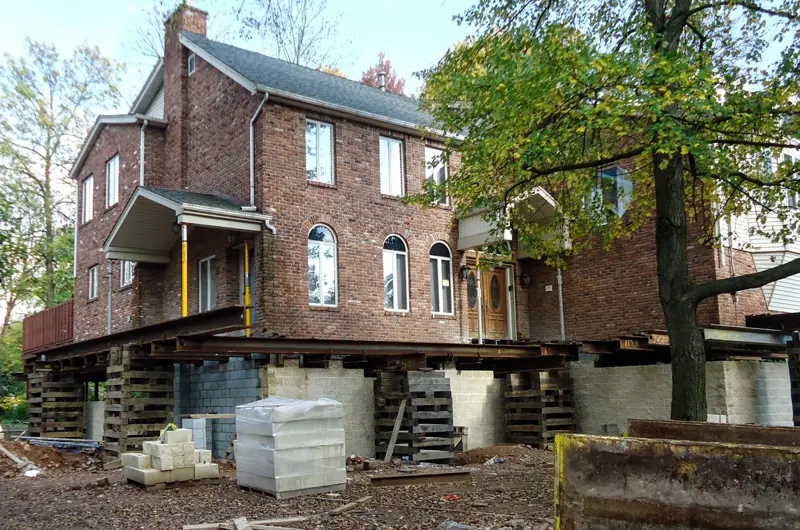
Leveling usually happens alongside slab foundation repair in Tyler or pier work. If you are not sure the floor slope is structural, start with a foundation inspection in Tyler to find out how much the house has actually moved.
Symptom checker
Most repairs start with one of these signs. Tap a card to see what it can point to.
Often the first sign that the frame has shifted as clay swells or shrinks.
Mortar cracks that climb diagonally usually follow foundation movement.
A marble that rolls on its own is worth a closer look by a contractor.
Separation at trim tells you which corner may be dropping.
Poor drainage feeds the swell-and-shrink cycle in East Texas soil.
Hairline shrink cracks are common; wide or offset ones need a check.
How a repair usually goes
A local crew measures floor elevations, checks cracks, doors and drainage, and looks for the cause, not only the symptom.
You get a written scope from the contractor: repair method, pier count and placement, drainage fixes and their warranty terms.
Supports are installed or adjusted and the house is lifted back toward level as far as the framing safely allows.
Final elevations are recorded and drainage is checked so you can compare future readings and spot new movement early.
Pricing
Most of a slab bill is driven by how many supports go in and how deep they need to reach below East Texas clay.
Pressed concrete, steel and helical piers price differently and reach firm soil at different depths.
Tight crawl spaces, decks, landscaping and plumbing under the slab all add labor hours.
Gutters, downspout extensions or French drains are separate line items but protect the repair.
An engineer's letter or city permit may be required for larger lifts.
Transferable lifetime warranties sometimes carry a higher price; read the exclusions.
Questions
Usually not. Older homes in particular have framing that has bent over years. Crews aim to improve the floor as much as safely possible without cracking finishes or stressing the structure.
They overlap. Leveling is the lifting and adjusting; foundation repair also includes installing new supports so the house stays where it is put.
Talk to a local foundation crew that knows East Texas clay.
Takes under a minute
Talk to a local foundation crew that knows East Texas clay.